Stakeholder Management in Project Management
January 5, 2025

Plan Smarter. Execute Faster.
Interactive Project Management Tool, real-time collaboration.


⭐ 4.8 Rating • Trusted by modern teams worldwide
Learn how to identify, engage, and manage stakeholders to ensure project success.
Introduction
Stakeholder management is a critical aspect of project management. To effectively manage stakeholders, it's essential to understand who they are and their impact on the project. Stakeholders include anyone who influences or is influenced by the project. Proper stakeholder identification and engagement can make or break a project. This article delves into the key principles and strategies for successful stakeholder management.
What is Stakeholder Management?
Stakeholder management is the process of identifying, analyzing, and engaging individuals or groups who are impacted by or can impact the project's outcomes. Stakeholders are not limited to internal team members; they also include external parties such as customers, suppliers, and regulatory bodies. A successful project ensures all stakeholders are informed and their expectations managed effectively.
Steps in Stakeholder Management
1. Identifying Stakeholders
The first step is to identify all stakeholders. This includes both internal and external parties. Missing out on key stakeholders, especially those with significant influence, can lead to major project risks. Early identification allows for proactive engagement.
2. Communicating with Stakeholders
Effective communication is the backbone of stakeholder management. Informing stakeholders about the project's objectives, progress, and potential impacts ensures alignment and minimizes misunderstandings.
3. Analyzing Stakeholders
After identification, stakeholders should be analyzed based on their power, influence, and interest in the project. The Power-Interest Matrix is a useful tool here:
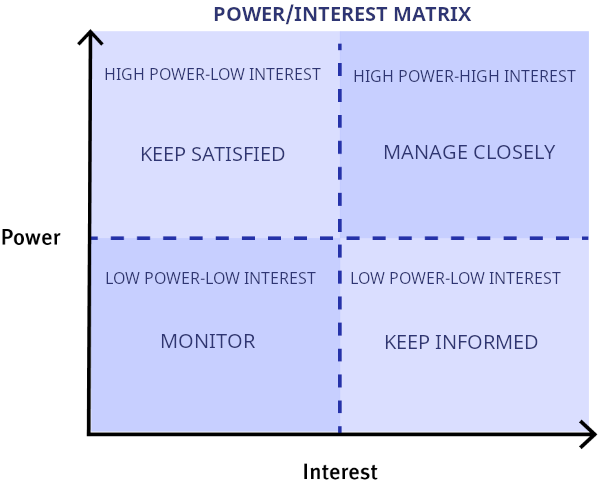
- High Power, High Interest: Manage closely (e.g., sponsors, key decision-makers).
- High Power, Low Interest: Keep satisfied (e.g., regulators).
- Low Power, High Interest: Keep informed (e.g., end-users).
- Low Power, Low Interest: Monitor with minimal effort.
4. Tailoring Engagement Strategies
Engagement strategies should be customized based on stakeholders' influence and interests. For example:
- Supportive stakeholders should be leveraged for project advocacy.
- Neutral stakeholders may need more information to gain their support.
- Opposing stakeholders should be engaged with empathy and data to address their concerns.
Types of Stakeholders
1. Resistant Stakeholders
Resistant stakeholders oppose the project and can negatively influence outcomes. Addressing their concerns and turning resistance into support requires effective communication and conflict resolution skills.
2. Neutral Stakeholders
These stakeholders do not actively support or oppose the project. While they require minimal engagement, ensuring they remain informed is essential to prevent potential issues.
3. Supportive Stakeholders
Supportive stakeholders positively impact the project. Their involvement should be maximized to drive project success.
4. Leading Stakeholders
These stakeholders take an active role in guiding the project. Their expertise and authority should be utilized to remove barriers and achieve objectives.
Why Stakeholder Management Matters
Failing to manage stakeholders effectively can lead to:
- Misaligned expectations.
- Resistance to project changes.
- Delays and cost overruns.
On the other hand, proper stakeholder management ensures:
- Smooth communication.
- Alignment of goals.
- Higher chances of project success.
Conclusion
Stakeholder management is not just about creating a list of people involved in a project. It's about understanding their power, influence, and expectations while keeping them informed and engaged. With the right approach, stakeholder management transforms potential challenges into opportunities for collaboration and success.
🌟 Download the app today and take your team management to the next level: 👉 App Store | Google Play